
Career Opportunities and Skills to Help You Stand Out
The demand for nurse practitioners continues to create exciting opportunities for advanced practice nurses looking to grow their careers, expand their clinical expertise, and explore new specialties. From primary care and family practice to mental health and urgent care, nurse practitioners play an increasingly important role in meeting patients’ healthcare needs.
But if you’re considering your next career move, you may be wondering:
“Which Type of Nurse Practitioner Is Most in Demand?”
While demand varies by region and healthcare setting, several nurse practitioner specialties offer strong career opportunities.
1. Family Nurse Practitioners (FNPs)
Family nurse practitioners are among the most versatile advanced practice providers. They care for patients across the lifespan, from children to older adults, and may work in primary care offices, community health centers, retail clinics, and other outpatient settings.
As healthcare systems work to improve access to preventive and ongoing care, FNPs remain an important part of the healthcare workforce.
Why FNPs are in demand:
– Provide preventive care, physical examinations, and chronic disease management.
– Treat common acute illnesses and minor injuries.
– Support patients with diabetes, hypertension, obesity, and other chronic conditions.
– Work in a variety of outpatient and community-based settings.
For FNPs who want to feel more confident in everyday clinical decision-making, building practical skills can be as important as strengthening foundational knowledge. Continuing education in wound care, suturing, ECG interpretation, and urgent care procedures can help providers prepare for the clinical challenges they may encounter in practice.
2. Psychiatric-Mental Health Nurse Practitioners (PMHNPs)
Mental healthcare remains a major need across the United States. Psychiatric-mental health nurse practitioners evaluate, diagnose, and manage a range of mental health conditions, depending on their training, certification, and state scope of practice.
PMHNPs may work in outpatient mental health clinics, hospitals, private practices, community organizations, and telehealth settings.
Why PMHNPs are in demand:
– Growing need for accessible mental health services.
– Increased recognition of depression, anxiety, and other psychiatric conditions.
– Opportunities to provide medication management and ongoing psychiatric care.
– Potential to work in underserved communities and behavioral health settings.
Providers entering or advancing in this specialty benefit from continued learning in psychiatric emergencies, suicide risk assessment, psychopharmacology, and evidence-based treatment approaches.
3. Adult-Gerontology Nurse Practitioners (AGNPs)
As the population ages, healthcare providers are needed to address complex medical needs, chronic conditions, medication management, and preventive care for adult and older adult patients.
Adult-gerontology nurse practitioners may work in primary care, specialty clinics, hospitals, rehabilitation facilities, and long-term care settings, depending on their certification.
Why AGNPs are in demand:
– Increasing need for chronic disease management.
– Complex medication and treatment considerations.
– Greater emphasis on preventive care and healthy aging.
– Opportunities in both primary and specialty care.
Strong assessment, diagnostic reasoning, and medication-management skills help AGNPs deliver effective, patient-centered care.
4. Acute Care Nurse Practitioners (ACNPs)
Acute care nurse practitioners focus on patients with complex or rapidly changing health conditions. They may work in intensive care units, emergency departments, hospitalist services, and specialty inpatient settings.
These providers need strong clinical judgment, the ability to recognize deterioration, and confidence in managing complex patients.
Why ACNPs are in demand:
– Ongoing need for hospital-based care.
– Complex medical conditions requiring advanced assessment.
– Need for timely evaluation and management of critically ill patients.
– Opportunities in specialized inpatient services.
Continuing education that strengthens clinical reasoning and reinforces evidence-based practice can support professional development in these demanding environments.
5. Women’s Health Nurse Practitioners (WHNPs)
Women’s health nurse practitioners provide care related to reproductive health, gynecologic conditions, contraception, preventive screenings, and other women’s health needs within their training and scope of practice.
They may work in OB-GYN practices, women’s health clinics, reproductive health services, and other specialty settings.
Why WHNPs are in demand:
– Need for accessible reproductive and preventive healthcare.
– Ongoing demand for contraceptive counseling and management.
– Preventive screenings and evaluation of gynecologic concerns.
– Opportunities to support patients through different stages of life.
Providers in women’s health can benefit from ongoing education in hormone therapy, evidence-based prescribing, and individualized treatment planning.
Why Clinical Skills Matter in Today’s NP Job Market
Choosing a specialty is only one part of building a successful career. Employers and patients also benefit when nurse practitioners can apply their knowledge confidently, recognize potential complications, and make sound clinical decisions. Depending on the role and state scope of practice, practical skills such as suturing, wound assessment, ECG interpretation, and urgent care procedures may be valuable additions to a provider’s professional development.
This is where targeted continuing education can help.
Our hands-on workshops and online, self-paced CE/CME courses are designed to help nurse practitioners and other eligible advanced practice providers strengthen clinical knowledge and develop practical skills relevant to their work. Whether you are transitioning into a new setting, refreshing existing skills, or looking for ways to expand your clinical capabilities, focused education can help you prepare for the demands of modern practice.
3 Ways to Strengthen Your NP Career Through Continuing Education
1. Build Confidence With Hands-On Clinical Workshops
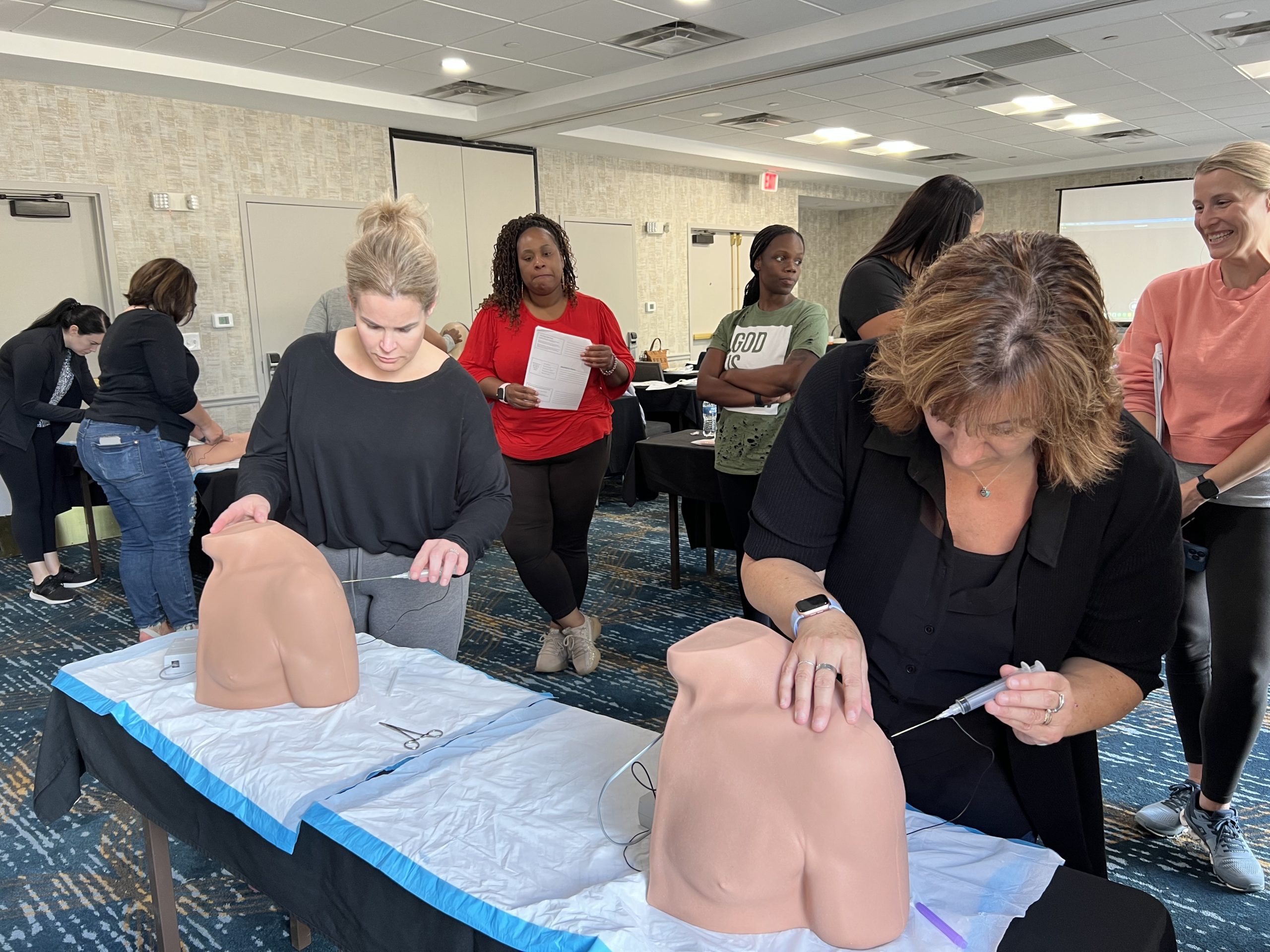
Reading about a procedure and performing it in a guided learning environment are two different experiences. Hands-on workshops give participants opportunities to practice techniques, receive instruction, and reinforce procedural knowledge.
For NPs interested in urgent care, primary care, or other settings where minor procedures may be appropriate, suturing and clinical procedure workshops can provide valuable skills practice.
Our hands-on suturing and clinical procedures workshops are an opportunity to develop procedural knowledge and practice techniques in an educational setting. Explore upcoming workshop opportunities to see which options align with your professional goals.
2. Expand Your Knowledge With Flexible Online Courses
Busy clinical schedules can make it difficult to attend in-person education regularly. Self-paced online courses offer another way to pursue continuing education while managing work and personal commitments.
Depending on your specialty and learning goals, you may want to explore topics such as wound management, urgent care, psychiatric-mental health, medical weight loss, hormone replacement therapy, or ECG interpretation.
Our online, self-paced CE/CME courses cover a range of clinical topics to help eligible healthcare professionals continue learning on their own schedules. Review our course catalog to find education that fits your specialty, interests, and professional development needs.
Look through them here: https://npskillsmadeeasy.com/#courses
3. Choose Education That Supports Your Next Career Move
The most useful continuing education is education that connects directly to your professional goals.
Ask yourself:
– Am I preparing to move into a new clinical setting?
– Which conditions or procedures do I want to manage more confidently?
– What knowledge gaps have I identified in my current role?
– Which skills appear frequently in job descriptions for positions I want?
– What continuing education is relevant to my certification, state requirements, and scope of practice?
For example, an FNP interested in urgent care may prioritize procedural skills and acute assessment, while a provider focused on wound management may benefit from deeper education in wound assessment and dressing selection.
Our workshops and online courses give providers options for pursuing targeted clinical education based on their individual goals. Rather than choosing courses simply to accumulate hours, consider how each learning experience can support your current responsibilities or future opportunities.
Learn more here: https://npskillsmadeeasy.com/#workshops
How to Choose the Right NP Specialty for You
Before committing to a specialty, consider these five factors.
1. Your interests. Choose a patient population and clinical environment that genuinely interest you. Long-term career satisfaction matters alongside job availability.
2. Your experience. Identify the skills you already have and the areas where additional education, mentorship, or supervised clinical experience may be beneficial.
3. Your preferred work environment. Primary care, hospitals, urgent care, mental health, and specialty clinics offer different responsibilities and daily routines.
4. Your local job market. Research actual openings in your area rather than relying exclusively on national trends. Compare experience requirements, certifications, responsibilities, and compensation.
5. Your professional development plan. Determine which credentials, clinical experiences, and continuing education activities are appropriate for your intended role. Remember that a CE course does not independently qualify you for a new NP specialty or expand your legal scope of practice.
Take the Next Step in Your NP Career
The nurse practitioner profession offers opportunities across multiple specialties, but long-term growth involves more than choosing an in-demand title. Developing clinical judgment, keeping your knowledge current, and identifying the skills relevant to your intended role can help you prepare for new professional challenges.
Whether you are a new graduate building your foundation or an experienced provider looking to strengthen your capabilities, continuing education can be a meaningful part of your career development.
Ready to invest in your clinical growth?
Explore our hands-on suturing and clinical procedures workshops and our online, self-paced CE/CME courses to discover learning opportunities that fit your goals. Choose your next educational step with your specialty, patients, and professional future in mind.
Learn more here: https://npskillsmadeeasy.com/#courses